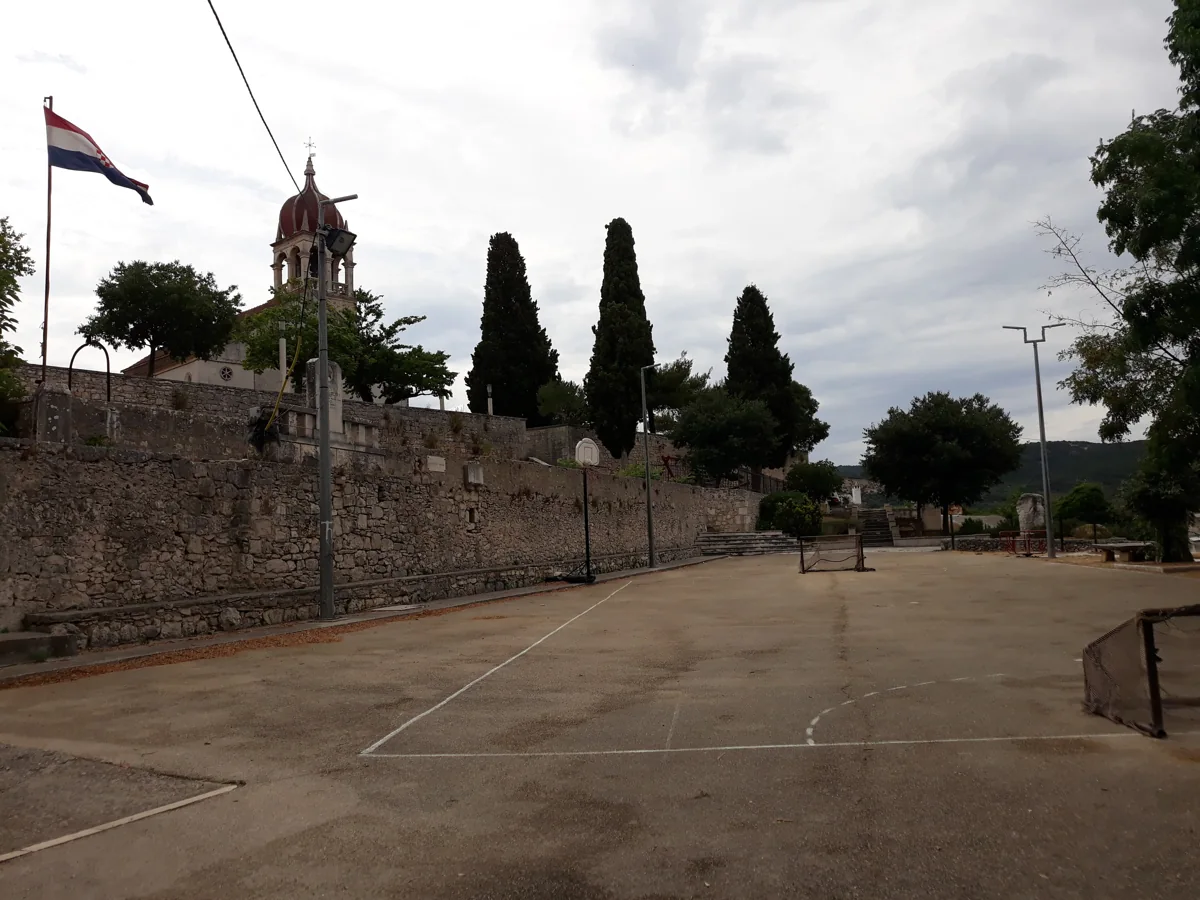
Donji Humac: a living craft.
Donji Humac belongs to the municipality of Nerežišća and has a strong tradition of stoneworking. The material you see in buildings is also a livelihood. A slow visit can connect a village square and church with the broader story of Brač’s craftsmen and sculptors.
If you would like to visit a workshop, arrange it in advance. A working studio is a place of production; access, demonstrations and purchases depend on its owner.
Dračevica: the value of a pause.
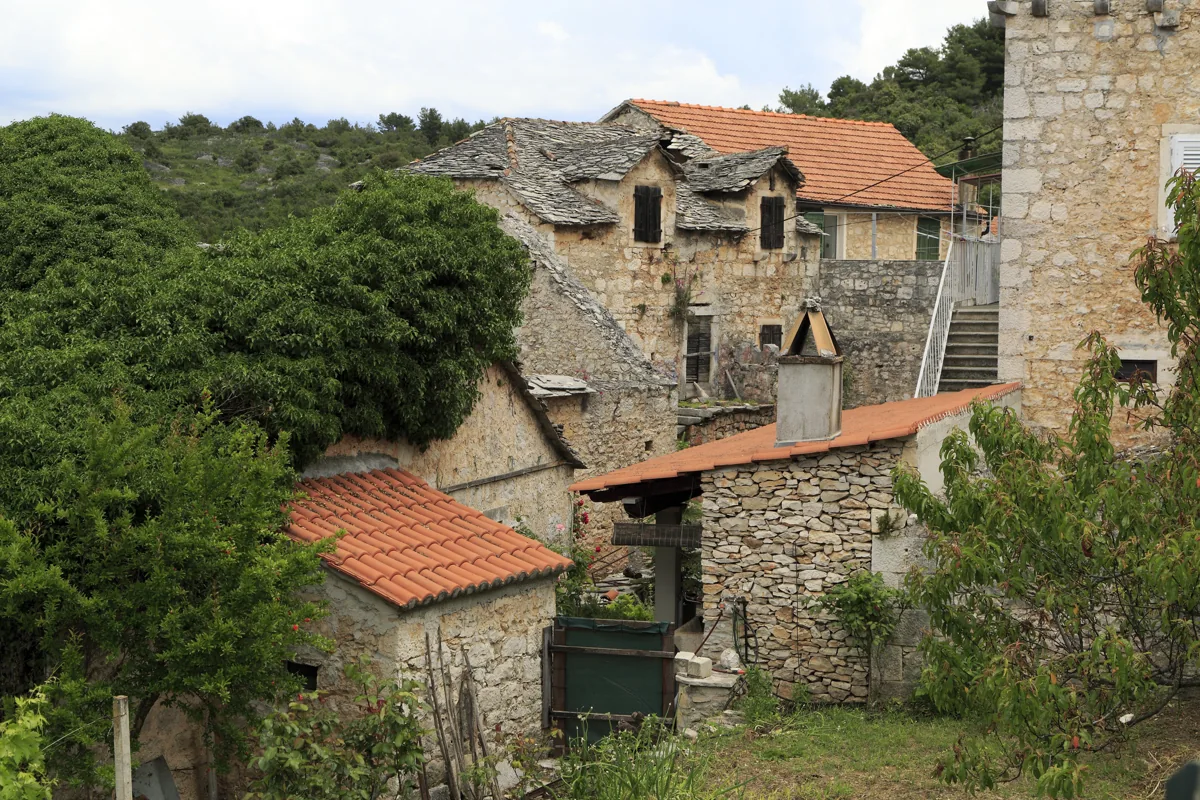
Continue west towards Dračevica for another view of inland village life. Stone houses and small-scale streets invite an unhurried walk. Resist the urge to turn every settlement into a checklist of attractions.
Look at how a doorway, a wall and a patch of shade hold a street together. These villages are lived in: a considerate visitor leaves room for local routines.
Let lunch belong to the island.
Make food part of the journey without treating it as a guaranteed menu. Ask about local olive oil, seasonal vegetables, island cheese or lamb when available. Confirm restaurant opening and reserve directly when needed.
A village meal, followed by one landscape outing, often makes a better day than racing between every island landmark. Choose fewer stops and give them more attention.