From refuge to a world of its own.
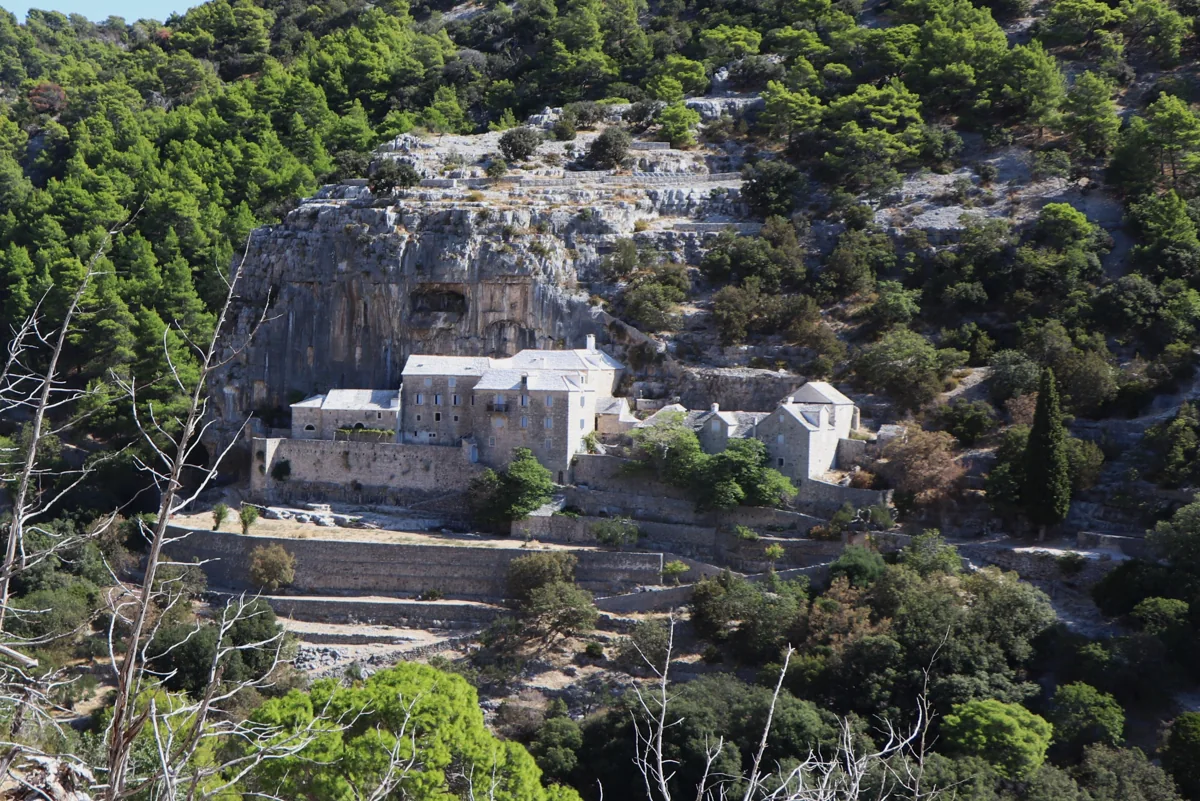
Blaca began in the sixteenth century with Glagolitic priests arriving from Poljica. A cave refuge developed into a complex of religious, domestic and agricultural buildings pressed against the rock. The encounter is as much about its setting as its architecture.
Approach without rushing. The landscape makes the achievement legible: rooms and terraces appear beneath an imposing cliff, far from the easy movement of an island harbour.
The unexpected reach of a remote place.
The hermitage’s preserved collection includes a library, a printing press and astronomical instruments associated with its final resident, Nikola Milićević. Blaca was remote, yet its intellectual life looked well beyond the valley.
During a museum visit, let individual objects draw you into the story. Books, tools and scientific equipment reveal a place that held practical work and curiosity together.
The walk is part of the visit.
The final approach is on foot. The Supetar Tourist Board describes the inland approach from Dragovoda as about half an hour one way. This is an approximate guide, not a promise: terrain, weather and individual pace matter.
Allow for the climb back, carry water and wear shoes with grip. Check the museum’s current opening arrangements and the condition of the approach before setting out. Blaca deserves its own generous part of the day.
Sources & further reading
Turistička zajednica grada Supetra · Blaca